
Piedmont, CA Homes for Sale
Schools, community, and a suburban enclave that answers only to itself
Local
Piedmont occupies 1.7 square miles in the East Bay hills, entirely encircled by Oakland. This is not a neighborhood. It is an independent city, with its own schools, its own police and fire departments, its own elected officials, and a civic identity it has been actively defending since 1907, when its founders incorporated specifically to avoid being absorbed into the city pressing in on all sides, a decision made all the more urgent by the flood of San Francisco refugees arriving after the 1906 earthquake. There were also those interested in land who had no desire to mess with the Oakland tax authority.
That origin story still shapes the place. Piedmont is deliberate about what it is. Streets are immaculate, parks are carefully maintained, and community institutions (the schools most visibly, but also the parks, the civic center, and the Piedmont Community Club) function with the seriousness of people who have decided to take local governance personally. This is a city that shows up for itself.
It is also, by any measure, an expensive and insular place: a city that has always known exactly what it is and has not been in a hurry to change. That self-containment is central to its appeal, and equally central to any honest assessment of fit. For buyers drawn to schools, architecture, safety, and a neighborhood-scale experience inside a major metropolitan region, Piedmont is one of the most compelling options in the Bay Area.
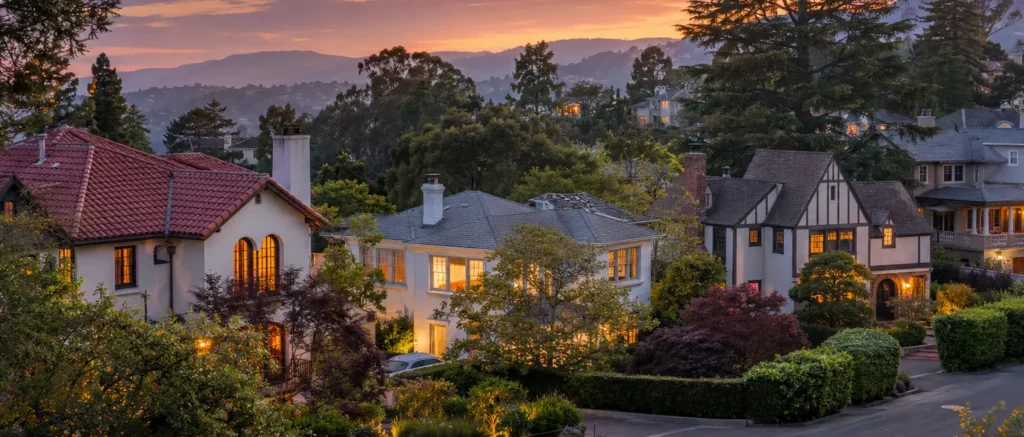
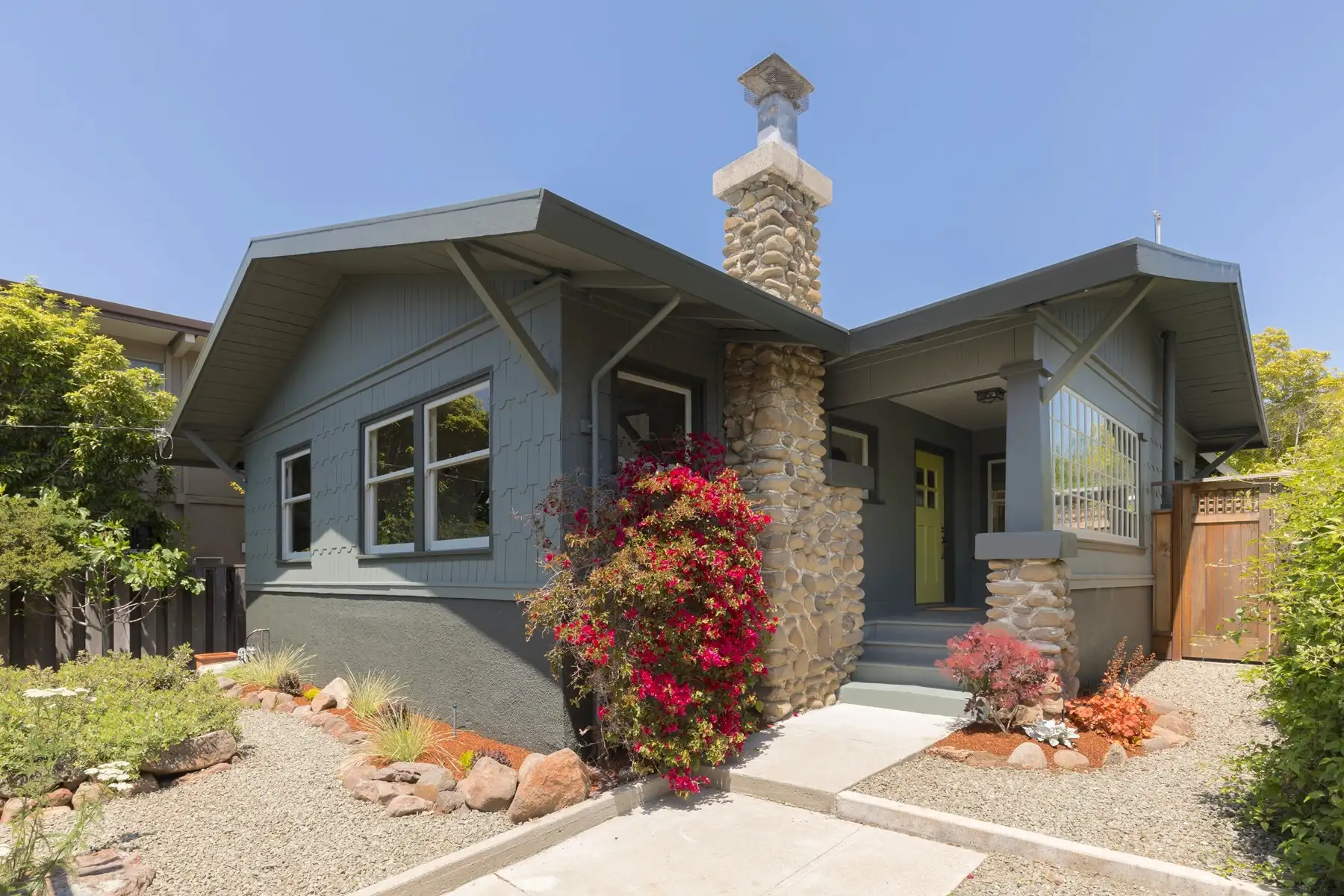
The architecture rewards attention. Tudor and Norman Revival estates occupy elevated hillside sites. Spanish Colonial residences from the 1920s and 1930s, some with terraced gardens and period tilework, sit along the upper streets. Craftsman bungalows and Colonial Revival cottages fill the lower reaches. Properties range across every scale from a modest shingled cottage to a full estate with guest quarters and orchard. What they share, broadly, is care, the kind that accumulates over generations of owners who had both means and interest in preservation. Much of what defines Piedmont’s architectural character was shaped by a handful of architects who worked here intensively during the city’s early decades. Albert Farr, who designed Piedmont City Hall, the Exedra Arch, and the Community Church, and who eventually settled and died in Piedmont, left an equally deep mark in residential work, producing homes that ranged from French châteaux to English cottages to American Colonial on Glen Alpine, Sea View, Wildwood, and Hampton. Willis Polk, one of San Francisco’s most prominent architects of the Gilded Age, designed the Moffitt estate on Sea View Avenue in 1912, a Georgian Revival property that remains standing today and is documented in the Library of Congress.
The schools are the explicit reason many families arrive. Piedmont Unified School District consistently ranks among the best public districts in California, see GreatSchools for current ratings and data. Piedmont High School sends graduates to competitive universities at a rate that draws comparisons to the state’s best private schools. Sharing the PHS campus is Millennium High School, the district’s small alternative high school: roughly 65 students, an intimate classroom culture, and a curriculum that meets students where they are rather than where the rankings want them to be. It is a quietly valuable option for families whose children thrive outside the traditional academic track, and it accepts inter-district transfers from beyond Piedmont. Piedmont Middle School and the district’s three elementary schools (Beach, Wildwood, and Havens) are the subject of the kind of sustained parental investment that produces strong outcomes. Access to PUSD is, for many buyers, the single most decisive factor in choosing Piedmont.
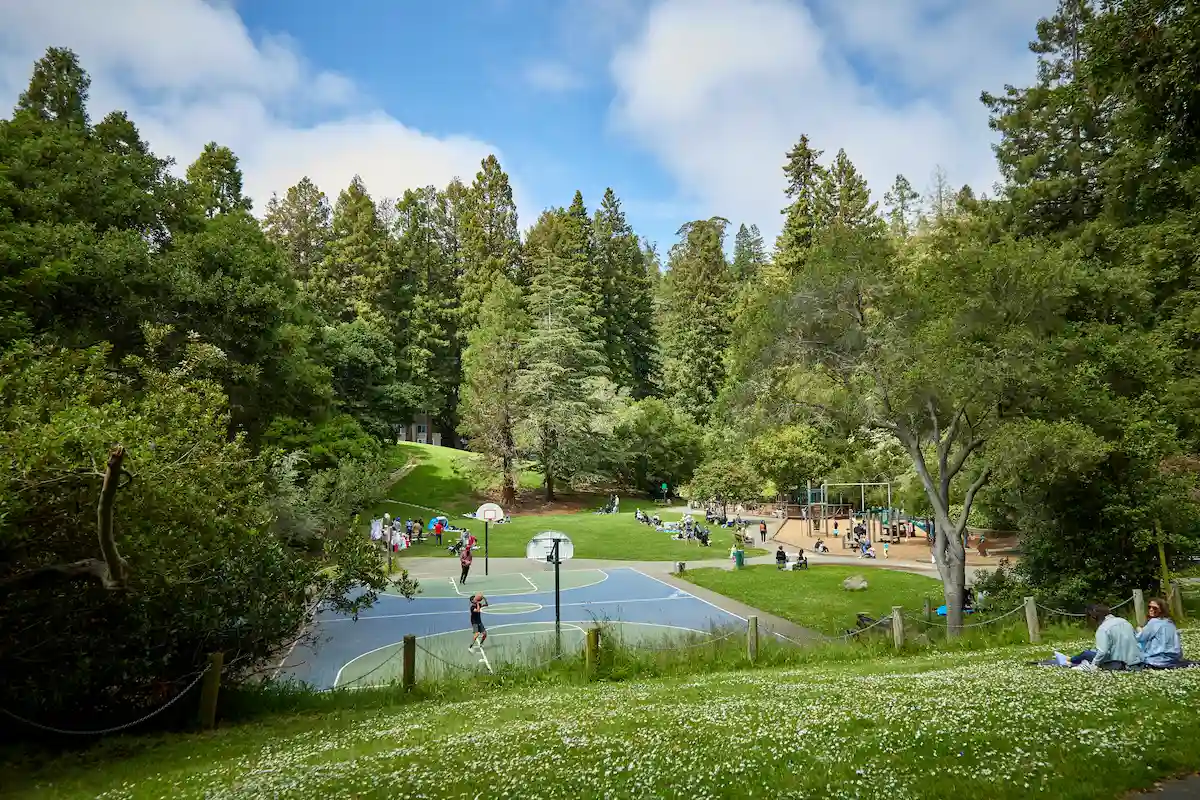
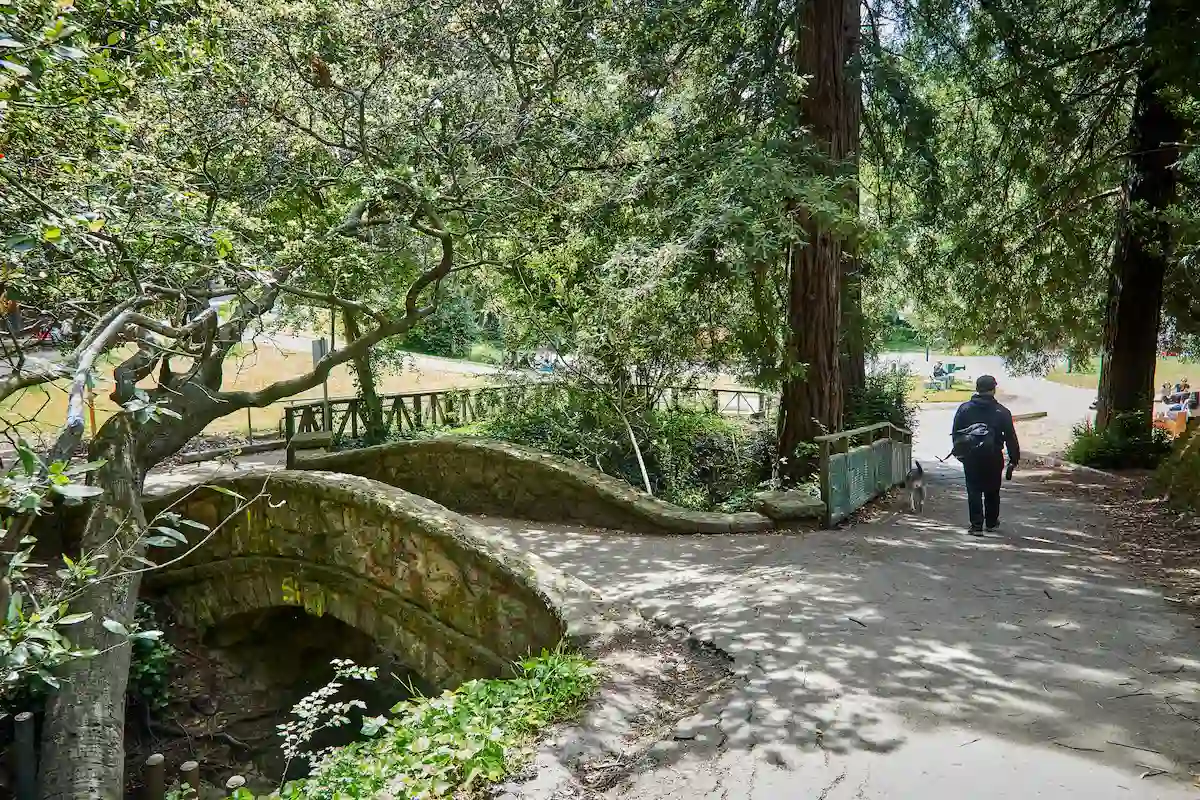
Parks are abundant for a city this size. Piedmont Park anchors the center with playing fields, tennis courts, and gathering spaces that host community events throughout the year. Blair Park connects the upper city to the Oakland Hills trail network. Linda Park anchors the lower edge. Dracena Quarry Park and Hampton Park add smaller green spaces threaded through residential blocks. Residents use all of them, not as amenity checkboxes but as genuine daily infrastructure.
Pickleball has taken hold with notable enthusiasm: courts operate at Linda Beach, Hampton, and Piedmont Middle School, with an active community organizing open play across all three. Dog owners are equally well served: off-leash areas are designated at Blair Park, Linda Park (fenced, with separate sections for large and small dogs), Dracena Quarry Park’s upper canyon, and along the creek trail in Piedmont Park. All require a simple off-leash permit from the city, which is, in its small way, a very Piedmont arrangement.
Piedmont has no BART station and limited commercial life of its own. For dining, groceries, and services, residents typically look to Oakland, which surrounds Piedmont on every side and offers a range of commercial corridors within minutes of almost any address. Grand Avenue is a particular favorite: walkable, well-supplied, and home to the beloved Grand Lake Farmers Market and the Grand Lake Theatre. The Piedmont Avenue corridor (an Oakland neighborhood, despite the confusing name) is another: a compact strip of bakeries, independent restaurants, and longtime shops that many Piedmonters treat as their de facto main street. Fenton’s Creamery, at the north end of the strip, has been making ice cream on-site since 1894, California’s longest continually operating creamery, inventor of Rocky Road, and a Pixar film location, and functions less like a restaurant than a neighborhood institution. Montclair Village serves the upper reaches.
Community life here has a particular texture, part small-town warmth, part deadpan civic seriousness, occasionally both at once. Each spring, Piedmont High School hosts the Leonard J. Waxdeck Bird Calling Contest, a beloved tradition since 1963 in which student contestants perform meticulously researched bird calls, in full costume, to a sold-out crowd, judged on authenticity, poise, and humor. Over its six decades, the contest sent winners to The Tonight Show with Johnny Carson for 17 straight years, then to Late Night with David Letterman. Tickets sell out every spring. It is, in some ways, the most Piedmont thing that Piedmont does. The Fourth of July parade down Highland Avenue (bagpipe bands, classic cars, neighborhood floats, followed by a community picnic in Piedmont Park) is another tradition now in its sixth decade, one that reflects the city’s Scottish heritage as much as its civic pride. Halloween brings children from across the East Bay to Piedmont’s decorated streets. The Piedmont Community Club holds it all together between occasions: classes, events, gatherings, and the casual cross-neighbor contact that, in larger cities, rarely happens. Civic participation (school board elections, bond measures, planning hearings) turns out voters reliably. Piedmont is a city of people who moved here on purpose and intend to stay.
Real estate here is expensive and competitive. Entry-level properties regularly exceed $1.5 million; significant estates trade well above that. Inventory is constrained by the city’s size, and demand is sustained by the school district, architectural quality, and the durability of Piedmont’s appeal. For buyers weighing long-term value, the fundamentals have held for decades.
Whether you are buying or selling in Piedmont, Winkler Real Estate Group brings detailed local knowledge, genuine architectural literacy, and the kind of perspective that only comes from years of working in a market this specific, and this worth getting right.
The Two Piedmonts
Longtime residents and seasoned agents describe Piedmont as two cities in one: not formally divided, and both unmistakably Piedmont, but distinct enough in topography, architecture, price, and daily feel to shape how buyers should approach the market. Understanding the difference matters.
Upper Piedmont
Upper Piedmont climbs into the Oakland Hills above the civic center, where streets grow steeper, lots grow larger, and the city’s residential ambitions become grand and architectural. This is the Piedmont that earned the historical label “City of Millionaires,” a designation that dates to the early 20th century and still resonates in the market.
The homes here are often among the most significant available in the East Bay. Tudor and Norman Revival estates sit behind mature hedges on parcels that allow for genuine separation. Spanish Colonial residences with period ironwork, terracotta roofs, and terraced gardens date to the 1920s and 1930s, designed when Piedmont attracted architects who treated residential work very seriously. Contemporary custom residences, when they appear, have been built with a similar commitment to permanence.
Views from the uppermost streets are expansive: Bay, bridges, and San Francisco twinkling in the distance. Streets like Sea View Avenue and Hillside Avenue (where Willis Polk’s 1912 Moffitt estate and several Albert Farr residences still stand) are known to agents and architecture enthusiasts alike. Access to Redwood Regional Park, Joaquin Miller Park, and the broader Oakland Hills trail network begins nearby.
The tradeoffs are real: steeper streets, more car-dependence, and greater distance from the civic and commercial activity at Piedmont’s center. Upper Piedmont is for buyers who prioritize scale, privacy, architecture, and views, and who are comfortable with a lifestyle built around driving.
Lower Piedmont
Lower Piedmont descends toward the Oakland border, where the topography flattens and the architecture shifts to the more domestic scale of Craftsman bungalows, Colonial Revivals, and period cottages. Properties here are smaller on average (though “smaller” in Piedmont carries its own asterisk) and entry prices, while substantial, are somewhat more accessible than in the upper reaches.
Daily life differs here. Oakland’s commercial corridors are closer and, in some parts of Lower Piedmont, genuinely walkable. Grand Avenue is minutes away. Piedmont Avenue is similarly accessible. Neighbors are slightly more likely to encounter each other on foot, and the boundary between Piedmont’s quiet and Oakland’s energy is thinner, which, depending on preference, reads as either advantage or compromise.
Architecturally, Lower Piedmont still rewards attention. Many homes have been maintained with care; Arts & Crafts details appear frequently, and the best blocks retain a coherent historic character that is rare in markets with greater development pressure. For buyers who want Piedmont schools and community while spending somewhat less, and who prefer flatter streets, more walkability, and proximity to Oakland, this half of the city is worth exploring carefully.
The Civic Center & Parks
The civic center is compact and serious: a small cluster of municipal buildings that handles the governance of a city unusually engaged in its own administration. Planning commission meetings fill up. Bond measures pass. This is a community that monitors what it built and intends to protect it.
The parks clustered near and around the civic center (Piedmont Park, Linda Park, Dracena Quarry Park, Hampton Park) are in daily use. Piedmont Park hosts community events year-round. Blair Park, at the upper edge of the city, connects pedestrians to the hill trail network. These are not amenity gestures; they are infrastructure, maintained with the same deliberateness that marks everything else here.
The Piedmont Community Club, adjacent to the civic center, is the city’s social engine: classes, events, gatherings, and the kind of casual cross-neighbor contact that, in larger cities, rarely happens. Membership is open to all Piedmont residents. It is, in practice, the thing that turns a wealthy enclave into something that also resembles a neighborhood, which is, for many people, the whole point.
Frequently Asked Questions About Living in Piedmont
What makes Piedmont different from Oakland and other East Bay cities?
Piedmont is an independent city, entirely surrounded by Oakland, with its own school district, police, fire department, and municipal government. Its schools, architecture, civic investment, and residential character are distinct from Oakland and from every other East Bay community. It is, in a meaningful sense, a city-state at small scale.
Are the schools as good as their reputation suggests?
Yes. Piedmont Unified School District has ranked among California’s top public districts consistently and over a long span, not as a recent development but as a durable institutional reality. For buyers with school-age children, this is frequently the decisive factor.
What is the practical difference between Upper and Lower Piedmont?
Upper Piedmont sits in the hills with larger properties, more dramatic architecture, wider views, greater privacy, and higher price points. Lower Piedmont sits closer to Oakland, offers somewhat more walkable access to commercial corridors, has slightly smaller homes on average, and enters the market at somewhat lower (though still high) prices. Both are fully within PUSD; both have access to the same parks and civic institutions.
Does Piedmont have good transit?
Piedmont has no BART station. It is, by East Bay standards, car-dependent. AC Transit serves some routes, and Oakland’s BART stations (including MacArthur and 19th Street) are reachable by car or rideshare within minutes.
Does Piedmont have significant architectural heritage?
Significantly. Albert Farr, among the Bay Area’s most prolific residential architects of the early 20th century, shaped Piedmont’s built environment more than any other single figure. He designed Piedmont City Hall, the Exedra Arch, and the Community Church, and produced residential work across Glen Alpine, Sea View, Wildwood, and Hampton ranging from French châteaux to English cottages to American Colonial. Willis Polk, who also designed Filoli and the Hallidie Building in San Francisco, left his mark here as well: his 1912 Moffitt estate on Sea View Avenue remains standing and is documented in the Library of Congress. Many Piedmont homes have appeared in designer showcase tours over the years. For buyers with an interest in historic residential architecture, Piedmont is one of the most rewarding markets in the East Bay.
Is Piedmont right for everyone?
Not necessarily. Piedmont is a small, self-contained, and expensive community with a particular character shaped by its history as an incorporated enclave. Its price points are among the highest in the East Bay, and its insular quality (which many residents prize) is not to every buyer’s taste. That said, it rewards buyers who are specifically drawn to what it offers.
How does Piedmont real estate hold up over time?
Strongly. The combination of school quality, architectural character, constrained supply, and sustained demand has kept Piedmont values durable across market cycles. It is among the most consistently high-performing residential markets in the East Bay.
Piedmont at a Glance
Piedmont is a small independent city of roughly 11,000 residents, entirely encircled by Oakland, in the hills of the East Bay. Incorporated in 1907, it operates its own school district, police and fire departments, and municipal government, and takes all three seriously.
The city is best known for its public schools, which consistently rank among California’s finest, and for a residential architecture that spans Tudor and Norman Revival estates, Spanish Colonial residences, Craftsman bungalows, and Colonial Revival cottages. Three main parks (Piedmont Park, Blair Park, and Linda Park) anchor daily life alongside the Piedmont Community Club, which functions as the city’s social infrastructure.
Piedmont divides informally into two halves: Upper Piedmont, in the hills, with larger properties, expansive views, and the most architecturally significant homes; and Lower Piedmont, in the flats, with somewhat more accessible pricing, flatter terrain, and proximity to Oakland’s Grand Avenue and Piedmont Avenue corridors. Both halves share the same schools, parks, and civic institutions.
The city is expensive, insular by design, and specific in its character, facts worth knowing alongside the undeniable high quality of life it offers. For buyers drawn to architectural character, civic investment, exceptional schools, and a self-contained community identity, Piedmont is a remarkable and enduring place to live.



Market Report
Hotspots
Nearby Dining
- Fenton’s Creamery
- Grand Lake Farmers Market
- Grand Avenue eateries
- Piedmont Avenue corridor
- Montclair Village
Parks & Sites to See
- Piedmont Park
- Blair Park
- Linda Park
- Dracena Quarry Park
- Hampton Park
- Piedmont Community Club
- Exedra Arch & Community Hall
- Piedmont Center for the Arts
Explore Piedmont
Related Articles

The Best Suburbs of San Francisco
The Bay Area has so many recreational, cultural, and gastronomical treats that can’t be found in So Cal.
Must-Do Experiences in the East Bay
No matter what your interests, the East Bay offers incredible diversity, cultural richness, and natural beauty. Here’s an overview of ten local treasures that are not to be missed.

East Bay Farmer’s Markets: Fresh, Local & Community-Driven
A comprehensive guide to East Bay farmer’s markets, including locations, hours, and special events, as well as seasonal produce and how to choose it.